
Guess The Song Game - Soundle
C2M Technologies, Inc.Music
3.93.00 Reviews
- Version
- 2.2
- Installs
- 10.00K
- Age Rating
- Everyone
Screenshots
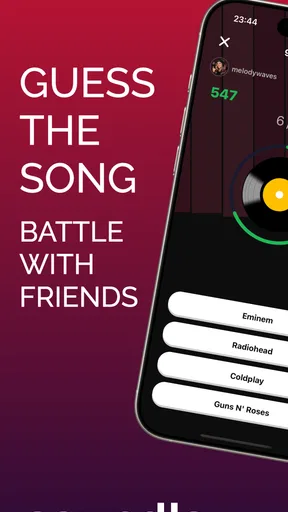
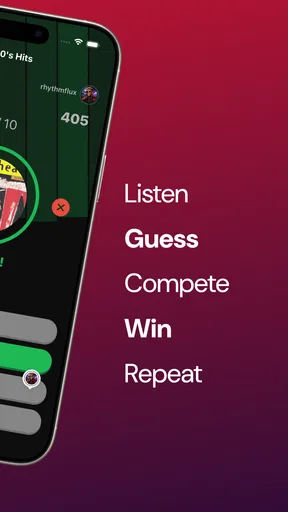
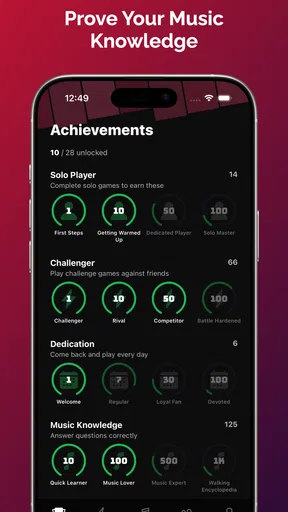
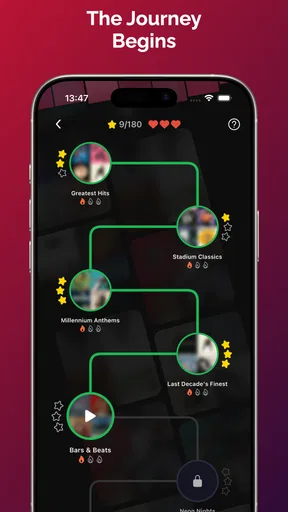
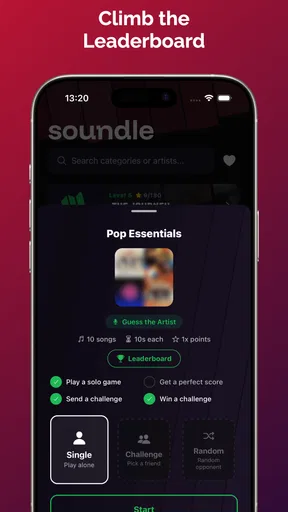
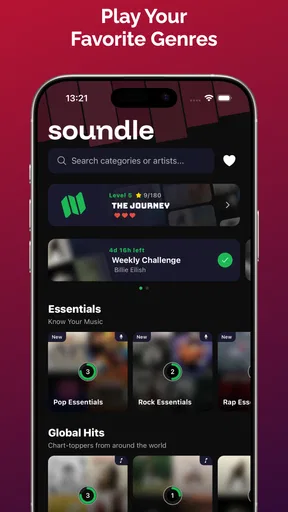
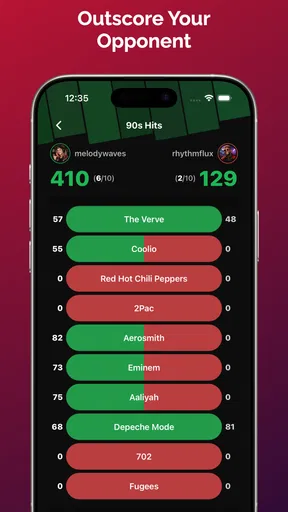
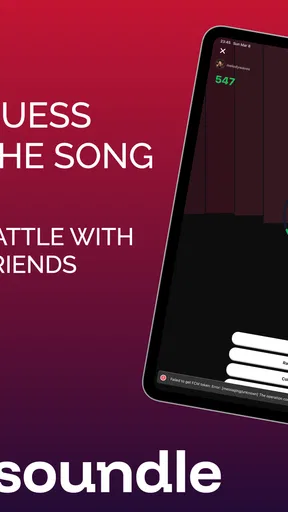
Our Review of Guess The Song Game - Soundle
 Analysis by Appyee
I approached Guess The Song Game - Soundle as a quick music challenge rather than a traditional rhythm game. That distinction matters. You are not mainly tapping to a beat or building a virtual band; the appeal is recognizing music, trusting your memory, and enjoying the small rush that comes when a familiar track finally comes to mind. Its central idea is simple, but simple does not automatically mean shallow. The quality of the experience depends on how well the questions keep you engaged, how fairly the challenge develops, and whether playing with friends remains entertaining after the novelty fades.
Created by C2M Technologies, Inc., this free music game is aimed at casual sessions and group play. The age rating is Everyone, so it is easy to imagine using it with family members, friends, or a mixed group where not everyone plays mobile games. The current release is version 2.2, and the game runs on Android 7.0 or later. It has attracted over ten thousand installs and holds a 3.9 average from more than four hundred ratings, which suggests a generally positive but not universally enthusiastic reception.
How the first few rounds establish the goal
The strongest early goal is obvious from the moment you understand the format: identify the song before someone else does, or before your confidence disappears. That gives each round a clean purpose without requiring a long tutorial or a complicated ruleset. I like this kind of immediate structure because it lets a group start playing quickly. Nobody needs to study a character system, understand a map, or learn a large collection of controls before the fun begins.
That simplicity also makes the game approachable for people who do not normally install music games. A friend who enjoys playlists but avoids competitive games can still participate because the useful skill is listening and remembering, not mastering a difficult control scheme. In a living-room setting, the phone can become the prompt for a conversation: one person recognizes the song, another remembers where they heard it, and a third argues that the answer is something else. Those reactions are part of the value.
My practical advice is to treat the first session as a calibration period. Do not judge the whole experience by whether you immediately know every answer. Music recognition is strongly affected by age, taste, language, and listening habits. A player who knows current pop may struggle with older material, while someone with a deep catalog of classic songs may find the opening rounds comfortable. The game works best when the group accepts that uneven knowledge is part of the entertainment rather than proof that one person is “bad” at it.
The social goal is more important than a personal collection or long-term avatar progression. That makes Soundle a better fit for a short gathering than for someone looking for a deep solo game with a large campaign. If your ideal music app lets you create tracks, perform songs, or improve a character over many hours, this will feel much lighter. If you want a fast way to turn music knowledge into a friendly contest, the straightforward design is an advantage.
What makes a session work in everyday use
I can easily see this being used during a relaxed evening when conversation has slowed down but nobody wants to commit to a long board game. One person opens the challenge, the group listens, and the discussion starts naturally. It also suits a short break because the basic premise does not demand a large uninterrupted block of time. The best environment is one where people are willing to call out guesses and laugh at wrong answers, not one where every round is treated like a serious examination.
There is a useful social rule I would recommend: let players explain why they chose an answer. A guess based on an artist’s voice, an opening sound, or a half-remembered chorus can be entertaining even when it is wrong. This turns the game from a silent test into a conversation starter. It also reduces the frustration for players whose musical background does not match the rest of the group.
Because the game is free to download, it is easy to suggest without asking everyone to pay before trying it. That lowers the barrier for casual groups. However, free access does not mean the entire experience is cost-free in every respect: in-app purchases range from $4.99 to $19.99 per item. I would recommend playing first and deciding later whether any purchase genuinely improves your group’s sessions. For an occasional party game, spending should be based on repeated use rather than first impressions.
Progress signals, challenge, and pacing
Soundle’s progress is felt through recognition rather than through a large visible adventure structure. Every correct answer is a small confirmation that your listening memory is working. Every close miss teaches you something about the way you identify songs: perhaps you rely too heavily on an artist’s voice, perhaps you remember lyrics better than introductions, or perhaps you need more context before committing to a guess.
That kind of progress can be satisfying, but it is less tangible than unlocking a new stage, collecting equipment, or improving a character. Players who need a clear ladder of rewards may find the motivation limited. The game’s momentum depends on the quality of the next challenge and the energy of the people playing, not on a deep progression system that carries the session by itself.
The pacing is most effective when rounds remain short enough to preserve anticipation. A music trivia game loses some of its appeal if every question becomes a long debate or if the answer is obvious before the challenge has had time to develop. I found the ideal rhythm to be quick listening, an immediate guess, and a brief reaction before moving on. Groups should avoid turning each answer into an extended argument, because that can make the game feel slower than it needs to be.
A useful tactic is to separate confidence from certainty. If you are playing with friends, say whether your answer is a strong guess or a risky one. This creates a second layer of play: people begin judging not only the song but also each other’s confidence. It is a small adjustment, but it helps familiar groups avoid repeating the same pattern where the most knowledgeable player answers everything instantly.
Difficulty is personal, not universal
The difficulty curve is naturally uneven because musical familiarity varies so much. There is no single difficulty level that will feel fair to every player. A question can be effortless for one person and nearly impossible for another, especially when tastes are divided by generation or genre. That is not necessarily a flaw, but it does mean the game should be chosen with the group in mind.
For mixed groups, I would begin with a few rounds that allow everyone to contribute before letting the most competitive players take over. If one person recognizes almost every song, consider asking them to wait a moment before answering. That simple house rule protects the social side of the game and gives slower listeners room to participate. Soundle is more enjoyable when the winner is not effectively decided before everyone has had a chance to think.
For solo play, the challenge can feel more exposed. Without friends reacting to the same prompt, a difficult question may feel like a dead end instead of a funny shared mistake. I would choose it for solo sessions only if you genuinely enjoy testing your music memory. Players looking for a richer single-player progression loop may prefer a music game with structured levels, unlockable content, or a more explicit sense of advancement.
One non-obvious strength is that the game can reveal gaps in your own listening habits. I often think I know a song until I have to name it quickly, and that pressure exposes how much I depend on lyrics, production style, or the singer’s voice. You can use those misses constructively: after a session, make a small playlist of songs you nearly recognized. That turns a frustrating round into a personal music-discovery exercise, even though the game itself is focused on guessing rather than playlist management.
When the challenge starts to lose pressure
Retention depends heavily on variety and social energy. The first session has an easy advantage because the format is new and every correct answer feels rewarding. After that, the game needs to keep producing moments of uncertainty, surprise, and recognition. If the same group always plays with the same expectations, the challenge can become predictable, particularly when one player’s musical knowledge dominates the room.
This is where I would keep sessions deliberately contained. Instead of leaving the game running indefinitely, set a modest end point before starting. A short contest with a clear winner usually feels better than continuing until people stop paying attention. The game is well suited to being a featured activity between conversations, not necessarily the only entertainment for an entire evening.
The purchase structure is another point to consider. Since individual in-app items can cost from $4.99 up to $19.99, regular players should decide whether the added value matches how often they actually return. I would be cautious about buying immediately just to extend a first session. A purchase makes more sense for a group that has already used the game several times and knows that its music trivia format fits their habits.
There is also a difference between retention created by the game and retention created by the group. Friends may keep returning because they enjoy their shared jokes, rivalries, and arguments, even if the underlying challenge remains simple. That is not a criticism; party games often succeed through the people around them. But solo users should be realistic about this distinction. If you need a strong independent reason to return every day, the format may not provide enough structure on its own.
Who should play it, and who should choose another option
I would recommend Soundle to friends who want a low-pressure music quiz that can start quickly. It is especially suitable for casual players, families, and groups with different levels of gaming experience. The Everyone rating supports that broad accessibility, while the free entry point makes it easy to test with a group before deciding whether it deserves a regular place on your phone.
It is also a good choice for people who enjoy the memory side of music. If you like identifying a track from a singer’s voice, a familiar musical pattern, or a fragment that seems just out of reach, the central loop has a natural appeal. The game does not need a large story because the songs and the reactions around them provide the subject matter.
I would skip it if you want a full rhythm-game experience. It is not the right substitute for a title built around precise tapping, performance timing, song charts, or visual spectacle. I would also look elsewhere if your priority is a deep solo campaign with extensive unlocks and a detailed long-term reward path. Soundle’s strength is immediacy, not complexity.
Compared with ordinary music trivia played from a printed list or a video playlist, the app is more convenient because it puts the prompt and the contest in one place. Compared with a streaming service, however, it is not a replacement for discovering, organizing, and continuously listening to music. A streaming app is better when you want control over the playlist; this game is better when you want the playlist to become a challenge.
Compared with a conventional quiz app, its music focus makes the experience more personal. General trivia tests broad knowledge, while song recognition often brings memories and preferences into the room. That can make the wins feel warmer, but it can also make the difficulty less balanced. Someone who does not share the group’s musical background may need encouragement to stay involved.
Small habits that improve the experience
First, play with a group that is willing to avoid instant shouting. Giving everyone a brief moment to think makes close answers more exciting and prevents the fastest responder from controlling every round. Second, rotate who starts the guessing discussion. This keeps quieter players involved and makes the session feel less like a contest between one expert and everyone else.
Third, use the game as a bridge to conversation rather than treating it as an isolated score test. Ask where someone first heard a song or why a particular artist is memorable to them. This is especially useful when the group includes people with different ages or tastes. A difficult answer can still be valuable if it leads to a recommendation or a story.
Finally, decide on spending boundaries before using any in-app purchase. The free version is the sensible starting point, while the listed item range means a larger purchase should be considered deliberately rather than casually. If your group only plays once every few months, the basic experience may be enough. If you repeatedly return and want to support longer sessions, you can judge the value from actual use instead of assumptions.
My verdict on the progression and staying power
My overall impression is that Soundle understands the appeal of a quick music guessing contest. Its early goal is clear, its controls are approachable by design, and its best moments come from the combination of recognition and group reaction. The 3.9 average rating reflects that it has a real audience, while the relatively small number of written reviews means I would place more weight on your own first session and the way your friends respond to it.
The progression verdict is mixed in a useful way. There is enough immediate feedback to make individual rounds satisfying, but the long-term drive comes more from new social situations and changing musical familiarity than from a clearly defined unlock journey. That makes the game easy to revisit for gatherings, yet less compelling for players who expect a substantial solo roadmap.
My recommendation is to treat it as a compact party-friendly music challenge, not as an all-purpose music game. Downloading it is a low-risk way to see whether your group enjoys identifying songs under pressure. Give it a fair test with several different players, keep sessions focused, and wait before considering purchases priced between $4.99 and $19.99 per item. If your friends start quoting wrong answers and demanding a rematch, the game has done its job. If everyone prefers simply listening to the songs without guessing, a normal music app will be the better choice.
For me, that is where Guess The Song Game - Soundle earns its place: not through elaborate systems, but through the small, reliable pleasure of hearing a familiar sound and racing to name it first. It is free, accessible on older Android devices from version 7.0 onward, and developed by C2M Technologies, Inc. As long as you approach it for quick shared challenges rather than endless progression, it is an enjoyable recommendation for music-loving groups.
Verdict
Strengths of Guess The Song Game - Soundle
- Quick rounds make it easy to play during short breaks.
- Covers a variety of songs and musical styles.
- Simple interface is accessible for casual players.
- Hints can help when a track sounds familiar but elusive.
- Guessing songs can improve memory for melodies and lyrics.
Limitations of Guess The Song Game - Soundle
- Some tracks or features may require in-app purchases.
- Ads can interrupt the game between rounds.
- Difficulty may vary noticeably from one song to another.
- The experience depends on having a stable audio connection.
- Players with niche music tastes may find limited song choices.
Similar Picks in This Category
View All
Tiles Hop Music & Ball Game
AMANOTES PTE. LTD.4.3

Magic Tiles 3™ - Piano Game
AMANOTES PTE. LTD.4.6

Real Piano
Bilkon3.7

Piano Game: Classic Music Song
Dream Tiles Piano Game Studio4.0

Smash Colors: Music Ball Rush
BADSNOWBALL HONGKONG LIMITED4.2

Piano Music Go-EDM Piano Games
Joy Journey Music Games4.5
Frequently Asked Questions
What is Guess The Song Game - Soundle?
Guess The Song Game - Soundle is a music-based guessing game that challenges you to identify songs from short audio clips or musical hints. Each round tests your memory of artists, titles, genres, and popular melodies. It is designed for quick, casual play, making it suitable for music fans who want an entertaining challenge without complicated controls or lengthy tutorials.
How do you play Guess The Song Game - Soundle?
Gameplay is generally straightforward: listen carefully to the available song preview, then choose or enter the title or artist you believe is correct. The audio clue may begin briefly and become easier as more of the song is revealed, depending on the mode. Correct answers help you progress, while mistakes may reduce attempts, points, or available hints in a round.
Does Soundle require an internet connection?
An internet connection may be needed for some features, such as loading song clips, updating the question database, displaying advertisements, synchronizing progress, or using online rankings. Availability can vary by version and device. If you plan to play while traveling or offline, check the app’s current store description and test whether previously loaded content remains accessible without a connection.
Is Guess The Song Game - Soundle free to download and play?
The game may be available to download at no initial cost, but free access can include advertisements, optional purchases, limited hints, or other restrictions. Before installing, review the Google Play Store or Apple App Store listing for the latest pricing and in-app purchase details. This is especially important if children will use the device or if you want uninterrupted gameplay.
What kind of music and devices does Soundle support?
Soundle is intended for players who enjoy recognizing music across different artists, eras, and genres, although the exact catalog can depend on the app version, region, and licensing arrangements. It is typically designed for modern Android and iOS devices, but compatibility, audio quality, and performance may vary. Keep your operating system updated for the best experience.
Play our best games!


